
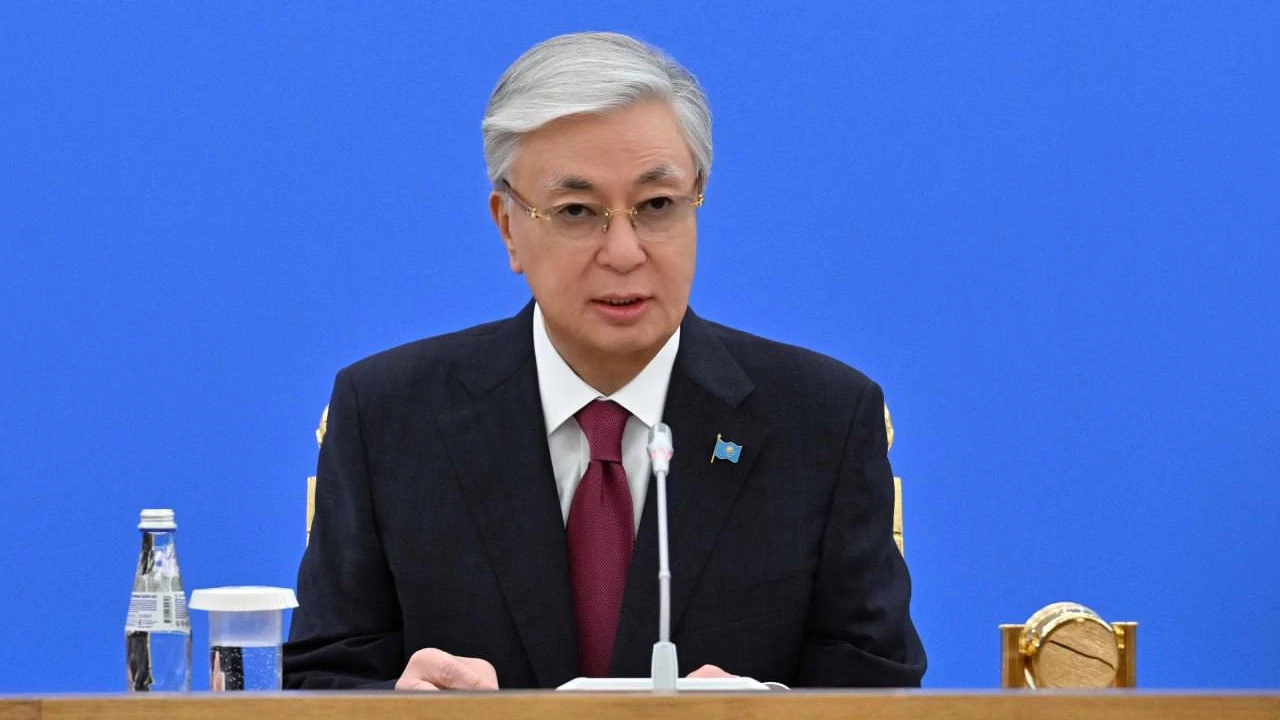
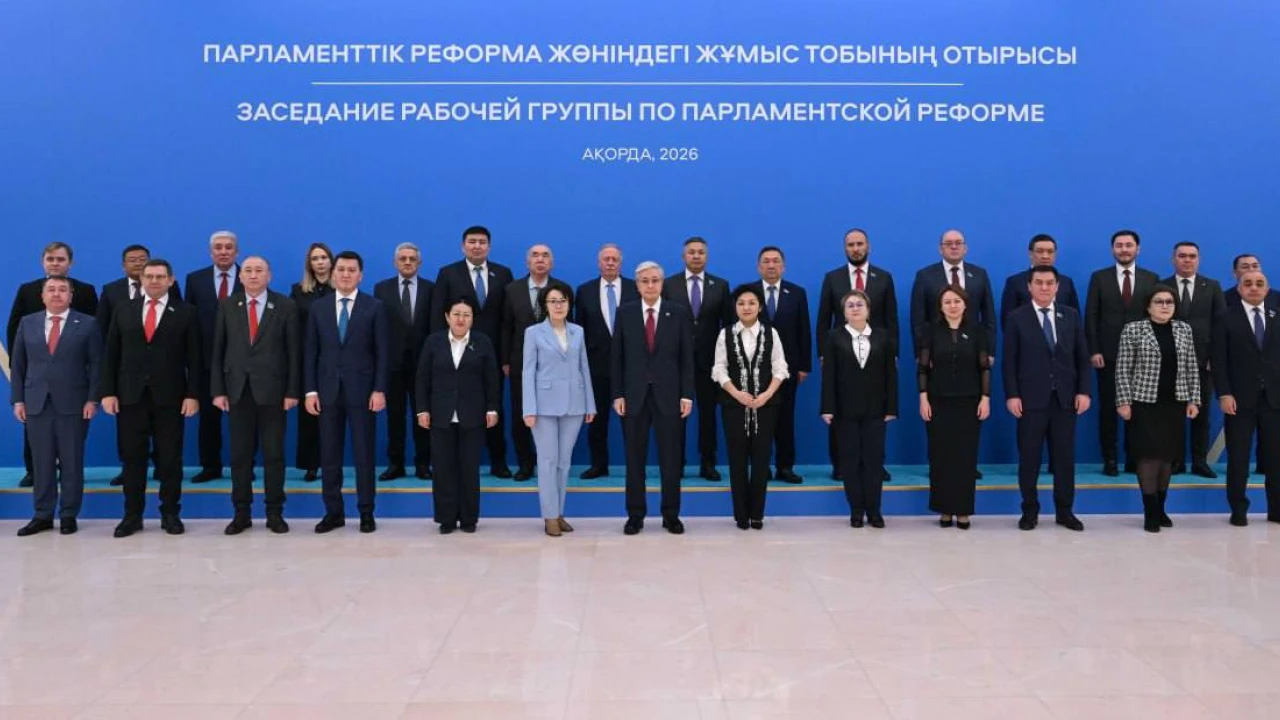
A meeting of the Working Group on Parliamentary Reform was held in Astana with the participation of the Head of State, Kassym-Jomart Tokayev.
At the beginning of the meeting, State Counselor Erlan Karin briefed the President on the activities of the Working Group, noting the substantial scope of proposed constitutional amendments aimed at transforming Parliament. He presented the overall vision of the Working Group members, emphasizing that the planned reforms would contribute to the modernization of the political system in line with contemporary challenges.
Special attention during the meeting was given to initiatives submitted by citizens and the expert community. Director of the Institute of Parliamentarism, Natalya Pan, presented a consolidated overview of appeals received through the digital platforms e-Otinish and eGov.
According to her, over the past several months more than 2,200 proposals and appeals have been received from all regions of the country. Of these, around 600 directly concern parliamentary reform, while another 1,600 address a wide range of issues related to the improvement of state and constitutional governance.
The majority of citizens’ appeals express support for the transition to a unicameral Parliament. As noted by the authors of the proposals, such a model would accelerate and simplify the legislative process, eliminate duplication of procedures between chambers, reduce budget expenditures, and enhance the transparency of deputies’ activities.
In addition, citizens have spoken in favor of a fully proportional electoral system for forming Parliament, which, in their view, would ensure greater political responsibility of political parties and strengthen the representativeness of the legislative body.
In their remarks, the Head of the Amanat party faction in the Mazhilis, Yelnur Beisenbayev; the leader of the Ak Zhol party, Azat Peruashev; and the Head of the faction of the Nationwide Social Democratic Party, Askhat Rakhimzhanov, emphasized the large-scale nature of the upcoming constitutional changes within the framework of parliamentary reform. They noted that during deputies’ working meetings in the regions, citizens demonstrated strong interest in the forthcoming political transformation.
Summing up the discussion, Kassym-Jomart Tokayev noted that nearly six months have passed since work on the reform began, and during this time a clear understanding of the goals and substance of the proposed transformations has emerged in society.
The Head of State emphasized that he is closely monitoring public discussions, expert opinions, and proposals submitted by citizens.
“A profound reconstruction of the institutional foundations and a systemic renewal of the legislative branch of power lie ahead. Tomorrow, at the meeting of the National Kurultai, I will present specific proposals on this issue. In fact, a qualitatively new political model is being formed in the country. The implementation of parliamentary reform will require revising a number of sections of the Constitution. Taking into account the changes introduced earlier, it is possible to speak, in essence, of the formation of a new Constitution of Kazakhstan,” the President stressed.
Ideas and proposals were also presented by the Chair of the Senate Committee on Constitutional Legislation, the Judicial System and Law Enforcement Bodies, Nurlan Beknazarov; Mazhilis deputies Unzila Shapak, Marat Bashimov, and Nikita Shatalov; as well as political scientist Burikhan Nurmukhamedov.